
Civic Sousveillance in Practice: What We Learned by Spotting Cameras Together
Last week’s Civic Sousveillance Workshop showed just how quickly collective observation can make the invisible visible.
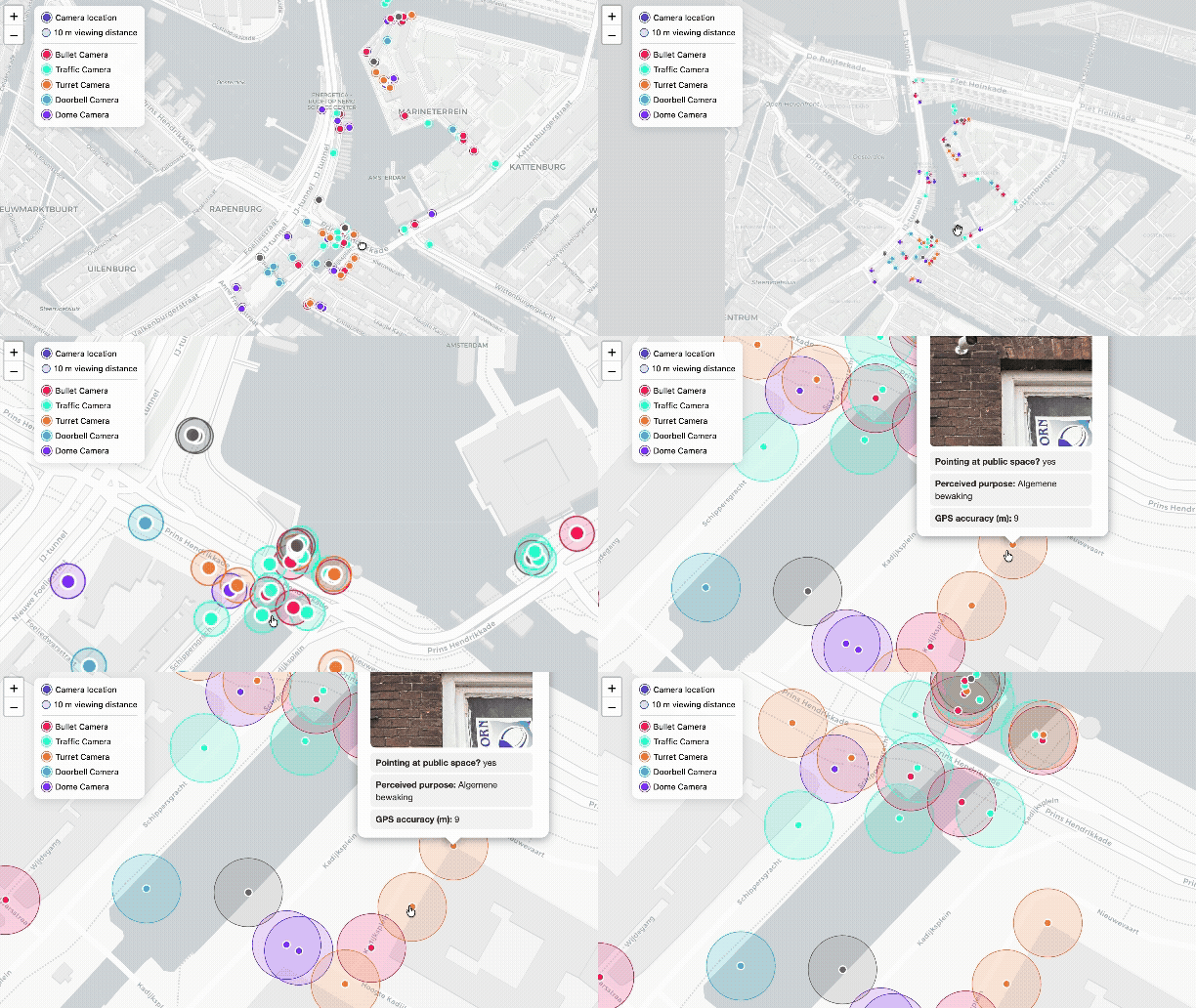
In less than 20 minutes, a group of around 20 participants mapped over 100 cameras in the immediate surroundings of ARCAM in central Amsterdam. No advanced tools, no access to official registers — just people walking, looking up, and documenting what they saw.
Zoom-iN, Pan, Click and Explore the cameras here ⤵
What the data revealed
Once we cleaned and analyzed the data, several patterns stood out:
Scale and density
The sheer number of cameras in such a small area surprised many participants. Even people who work daily in the neighborhood underestimated how saturated the public space already is.Types of cameras
Of the 110 cameras documented:Traffic enforcement, bullet, dome, and turret cameras made up the vast majority.
Doorbell cameras were a smaller but visible category, blurring the line between private and public surveillance.
A notable portion could not be clearly identified, highlighting how opaque and hard-to-recognize many systems have become.
Smaller, cheaper, smarter
Many cameras were compact, discreet, and easy to miss. This reinforces a broader trend: surveillance infrastructure is no longer exceptional or visually dominant — it is increasingly embedded, normalized, and automated.
Why civic sousveillance matters
What made this workshop powerful was not just the data, but who produced it. Residents, designers, researchers, and policymakers collectively experienced how much sensing infrastructure exists — and how little of it is publicly legible.
Civic sousveillance flips the script:
From being passively observed → to actively observing the systems that observe us
From opaque deployments → to shared documentation and public discussion
From abstract policy debates → to lived, spatial experience
The resulting crowdsourced camera map is not a complete or definitive register. It is something more important: a starting point for democratic oversight, public accountability, and informed debate about how sensing technologies shape our cities.
As cities continue to adopt cameras and sensors at scale, exercises like this remind us that visibility is a precondition for governance — and that citizens can play an active role in making urban technologies accountable.